
Generative AI has moved far beyond simple chatbot experiments. In 2026, AI-powered systems are becoming deeply integrated into software development, digital design, content production, and productivity workflows. What once required multiple specialized tools and large teams can now often be handled through AI-assisted platforms that reduce manual effort and accelerate execution.
The biggest reason adoption continues to grow is accessibility. Earlier generations of AI software were primarily built for researchers and technical users. Modern platforms are designed for mainstream creators, developers, marketers, startups, and remote teams that want faster workflows without complicated onboarding.
As more industries integrate automation into daily operations, understanding which AI tools provide practical value is becoming increasingly important.
AI Tools Are Becoming Workflow Platforms
One major shift happening in 2026 is that AI tools are no longer functioning as standalone utilities. Instead, they are evolving into full workflow ecosystems that combine writing assistance, media generation, automation, coding support, and research capabilities inside unified environments.
For developers, this means faster implementation and debugging. For designers, it means accelerated ideation and asset generation. For creators and businesses, it means producing high-volume content without dramatically increasing operational costs.
The result is a digital environment where individuals can handle workloads that previously required entire teams.
Pollo AI and the Rise of AI-Generated Video Workflows
Video content remains one of the fastest-growing formats across digital platforms, and AI-powered media generation tools are becoming increasingly common among creators looking to scale production efficiently.
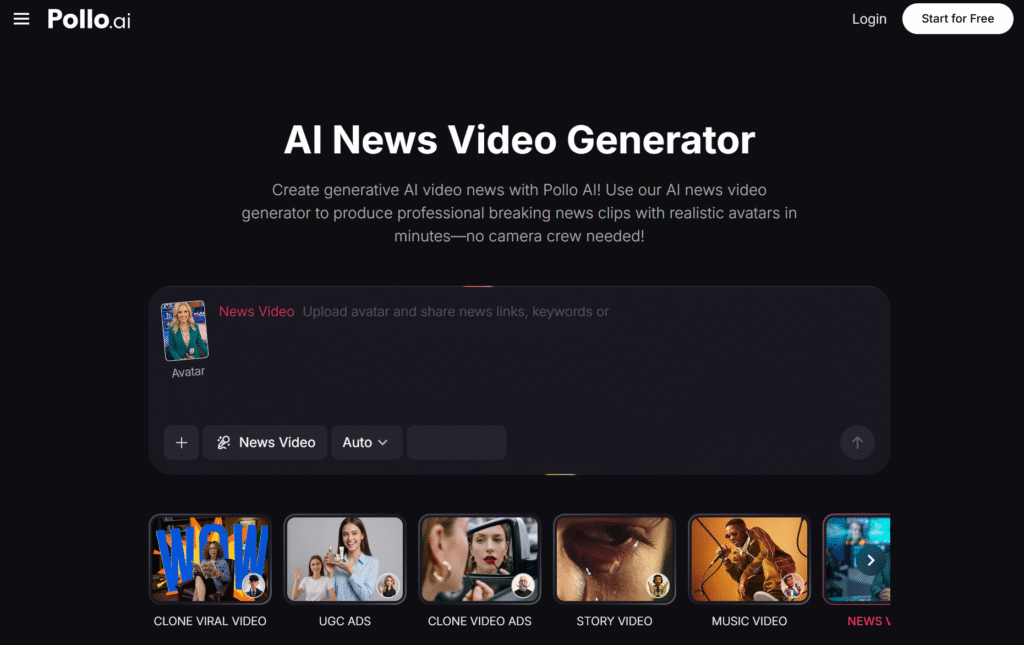
One area gaining serious attention is the ability to create generative AI video news without traditional studio infrastructure. Pollo AI’s approach to this is worth understanding in detail: instead of relying entirely on cameras, lighting setups, and manual production processes, AI-assisted platforms now allow users to generate presenter-style video content directly from written scripts — complete with AI anchors, automated voice synthesis, and broadcast-ready formatting.
This shift is especially relevant for independent creators, educational publishers, niche media channels, and small digital teams trying to maintain consistent publishing schedules. Pollo AI has built this into a workflow that reduces the production overhead that once made frequent video publishing difficult for smaller operations — the kind of overhead that previously kept professional-looking news-format video out of reach for anyone without a studio budget.
Rather than replacing traditional production entirely, these tools are helping simplify repetitive workflows and improve publishing speed in a way that compounds over time.
ChatGPT and Everyday Productivity
AI assistants are increasingly becoming part of everyday work routines. ChatGPT remains widely used because of its flexibility across writing, brainstorming, summarization, research support, and coding-related tasks.
Many users integrate conversational AI into documentation workflows, content planning, customer communication drafts, and educational learning environments. Instead of switching between multiple tools, users can centralize a variety of tasks through a single AI-driven interface.
The broader trend is not simply automation, but workflow acceleration through contextual assistance — and the teams that have internalized this distinction tend to extract far more value from the tools available to them.
AI-Assisted Development Continues Expanding
Software development is another area seeing major transformation through generative AI adoption. Coding assistants can now generate boilerplate code, explain functions, identify syntax issues, and accelerate debugging workflows.
These systems are particularly useful for repetitive implementation tasks, allowing developers to focus more heavily on architecture, logic, and problem-solving rather than routine coding patterns.
For newer programmers, AI-assisted development tools can also improve learning efficiency by helping explain technical concepts in real time. As AI integration within development environments matures, productivity gains are becoming increasingly noticeable across both individual and enterprise-level software teams.
Visual Generation and Design Automation
Design workflows are also evolving rapidly through generative AI systems capable of producing illustrations, concept art, mockups, thumbnails, and visual references within minutes.
This does not eliminate the need for designers, but it significantly changes the ideation phase of creative work. Instead of manually building early-stage concepts from scratch, creators can explore multiple visual directions quickly before refining selected ideas further.
Agencies, freelancers, and content creators increasingly use AI-assisted design tools to reduce turnaround time while maintaining creative flexibility. The speed advantage at the concept stage — where most of the revision cycles historically happened — is where generative design tools deliver their clearest return.
Where Vmaker AI Fits Into the Ecosystem
Different AI platforms solve different workflow problems, which is why many creators combine multiple tools depending on the project type and production context.
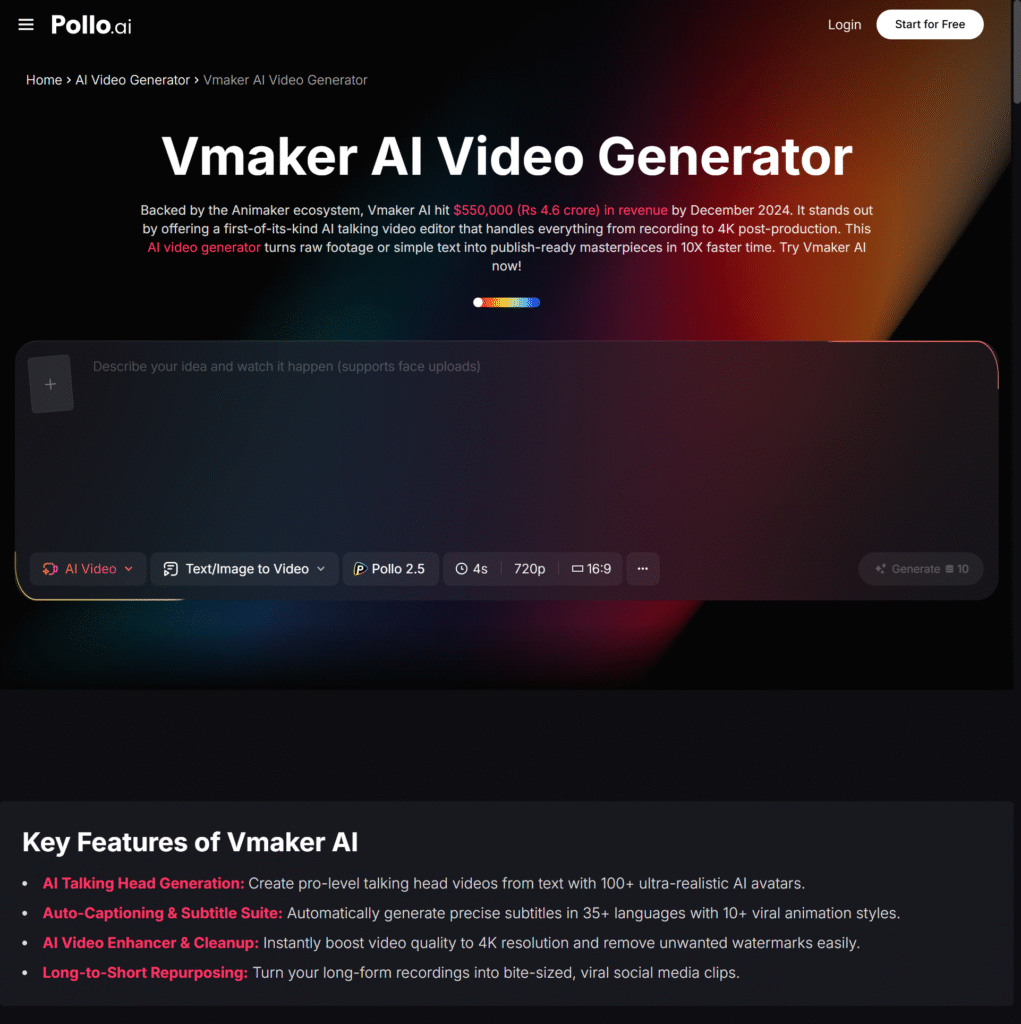
For users exploring screen-based content production and simplified recording workflows, Vmaker AI offers a lightweight alternative within the Pollo AI ecosystem that’s well-suited to tutorials, product walkthroughs, remote collaboration recordings, and educational content where speed and clarity matter more than complex production pipelines. It sits at a different point in the content creation spectrum than Pollo AI’s video news generator — one is optimized for broadcast-style scripted content, the other for screen-centric recording — and understanding which fits a given project type is the kind of tool literacy that separates efficient creators from ones perpetually fighting their own workflows.
As generative AI ecosystems continue expanding, the most effective approaches are becoming modular: different tools for different content types, selected deliberately rather than applied uniformly.
The Importance of Consistency Over Perfection
One pattern becoming increasingly clear across digital publishing is that consistent output often matters more than perfect production quality.
AI-assisted workflows reduce the time required to produce articles, videos, presentations, visuals, and documentation — which allows smaller teams and independent creators to maintain publishing consistency without dramatically increasing operational workload. For many creators, the real advantage is not replacing creativity, but removing the production bottlenecks that slow execution and erode momentum.
This is one of the primary reasons generative AI adoption continues spreading across media, development, education, and business environments. The tools that stick are the ones that make showing up consistently feel achievable.
Human Oversight Still Matters
Despite rapid improvements, generative AI remains a support system rather than a complete replacement for human judgment. AI-generated outputs still require fact-checking, editing, strategic direction, quality control, and contextual understanding that only comes from someone who knows the audience and the purpose behind the content.
The most effective workflows typically combine AI speed with human refinement. Users who understand how to guide, review, and improve AI-generated content generally achieve significantly better results than those relying entirely on automation — and that balance between speed and oversight will likely remain the defining characteristic of high-quality AI-assisted work for the foreseeable future.
Looking Ahead
Generative AI tools in 2026 are becoming far more practical, accessible, and embedded in everyday digital work. Whether someone works in development, design, education, research, content production, or business operations, AI-assisted systems are increasingly shaping how workflows operate — not by replacing human creativity, but by removing the friction that slows it down.
The most valuable tools are not necessarily the ones generating the most hype, but the ones that genuinely improve efficiency and fit naturally into existing processes. Professionals who understand how to integrate AI into real workflows — rather than simply experimenting with the technology in isolation — are the ones who will carry a compounding productivity advantage as the ecosystem continues to mature.