
We see millions of software applications being released yearly due to the rising demand from users. According to 42matters, 2,062,857 apps are currently available on Google Play. But, not all released apps are successful in meeting the quality and performance expectations of the users. Many get rejected due to bugs, performance issues, and other glitches. The main reason why this happens is the failure to check if all software components are working together.
End-to-end software testing is the crucial step that ensures your applications meet all user specifications at the time of launch. End-to-end testing, or E2E testing, verifies all components, including databases, APIs, and user interfaces, by simulating how real users interact with the application.
However, with applications becoming more complex, testers often face challenges while carrying out E2E testing. This article looks at specific challenges of E2E testing and probable solutions to overcome them. We will start by examining briefly what happens if applications are not tested end to end.
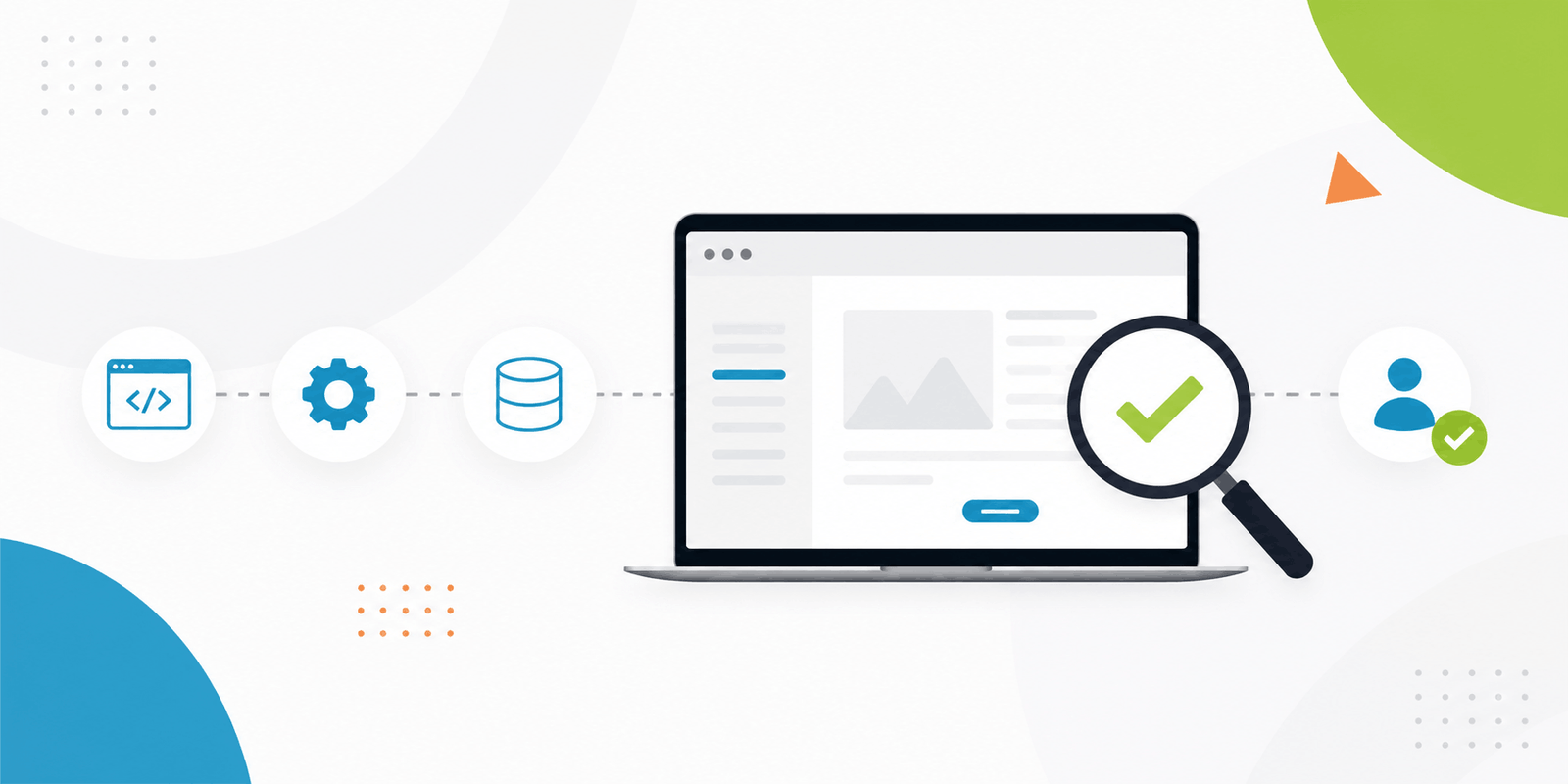
Why End-to-End testing Should Not be Overlooked
Software quality assurance through End-to-end (E2E) testing becomes possible because it detects problems that standard testing approaches cannot find. With AI-powered assistants like CoTester AI helping generate, maintain, and optimize end-to-end test cases, teams can achieve broader test coverage while reducing manual effort. Here’s why it’s essential:
- Uncovers Hidden Issues
The testing method of E2E differs from unit testing because it conducts full application evaluations from the user’s perspective. The method enables the discovery of workflow issues, integration problems, and all system functionality problems.
- Saves Time and Costs
E2E testing detects errors at an early stage, which reduces the need for repeated tests, thus saving time for debugging and lowering expenditure on testing activities.
- Ensures Seamless Integration
Today, applications depend on various components together with third-party service integration. The correct operation of dependencies can be verified through E2E testing, thus avoiding unexpected system failures.
- Enhances User Experience
The testing of real user interactions enables developers to recognize both performance problems and usability challenges, which help provide a seamless experience.
- Boosts Confidence Before Launch
Comprehensive testing provides a thorough examination of an application that results in reliable test results, which confirm system stability and readiness for deployment.
E2E testing should never be skipped because it reveals essential defects and integration problems, which result in poor user experiences, thus making it crucial for software development teams.
Top Challenges in E2E Testing and Suggested Solutions
The execution of end-to-end testing requires a detailed series of processes, which creates various challenges during implementation. The identification of these challenges in test automation at an early stage enables more effective testing results.
- Challenge: Managing Complex Workflows
Applications combine various systems with APIs and third-party services, resulting in thousands of test cases which makes it hard to perform efficient testing while maintaining seamless functionality.
Solution: The first step should be to concentrate on testing essential workflows. Precise automated testing software helps development teams test quickly while achieving all necessary testing areas and handling complicated integrations without development delays.
- Challenge: Setting Up a Realistic Test Environment
The process of establishing a test environment that duplicates live system operations proves difficult because it needs precise configuration of multiple components.
Solution: Use a testing platform with robust features that connects seamlessly to other systems in order to create an environment, which duplicates live system characteristics.
- Challenge: Maintaining Tests Over Time
The maintenance of end-to-end tests becomes challenging due to application updates that happen frequently. Every user interface modification requires testers to update their tests accordingly. The system fails to detect crucial bugs when proper updates are not implemented.
Solution: Teams need to start their testing efforts with the most important workflows before moving on to others. Test developers should prioritize high-risk areas of testing because this method allows critical features to receive full examination while avoiding excessive work for QA teams.
- Challenge: Unstable (Flaky) Tests
Test results become unreliable because certain tests keep passing and failing, which hinders the detection of genuine issues.
Solution: The analysis of failed tests should help identify the original causes. Test engineers should resolve unstable tests instead of dismissing them to preserve test reliability.
- Challenge: Slow Test Execution
The duration of end-to-end tests extends because they have to cover complete workflows, which slows down the feedback process for developers.
Solution: The implementation of automated testing helps to accelerate testing since automated tests execute significantly faster than manual ones. The most important workflows should be tested to minimize delays and optimize process efficiency.
Teams who address these problems in advance will achieve better results for their end-to-end testing operations.
Best Practices for Effective End-to-End Testing
E2E testing becomes really effective when teams go beyond technical execution. QA teams need to work alongside business stakeholders to understand entire user workflows in order to achieve correct validation. Several important practices should be observed to make end-to-end testing effective.
- Involve QA Early
QA teams should join development activities at the beginning stage. Understanding business processes early enables testers to create tests that reflect real user requirements.
- Define Success Metrics
Establish specific key performance indicators (KPIs) that will determine test effectiveness through measurements of defect detection rates, test coverage rates, resolution times, and deployment frequency counts.
- Encourage Cross-Team Collaboration
The development process should have continuous interaction between developers, QA teams, and business users. While QA experts focus on developing testing approaches, business users provide valuable inputs into real-world workflows.
- Use Realistic Test Data
Making test data similar to real-life operations produces more precise results. AI systems can help generate synthetic data, which facilitates the production of various test cases.
- Automate Where It Makes Sense
The automation of high-impact test cases, along with repetitive ones helps to increase efficiency while decreasing errors. Automate testing only for tasks that are both complex and high-risk, but avoid automation for all test cases.
- Regularly Update Test Cases
The accuracy of test scripts depends on regular system updates, which also leads to smooth functionality after updates are applied.
Following such standard operating procedures allows teams to boost E2E testing efficiency and reliability.
Read more: 7 Continuous Testing Best Practices That Accelerate Software Delivery
Key Areas to Focus on During E2E Testing
A smooth and reliable application results from executing end-to-end (E2E) tests, which cover all critical aspects. The following list contains the essential elements that need verification:
- Performance Testing
User frustration occurs when webpage loading exceeds reasonable speed limits. Testing key features’ speed, and responsiveness can guarantee a good user experience.
- Database Testing
Data storage and retrieval operations, along with updates, should be verified to ensure correct functionality. The database structure needs proper organization to perform as expected.
- Functionality Testing
The application needs to operate without any functional limitations. The functionality of buttons, forms, and workflows should be tested to verify proper operation.
- Compatibility Testing
The application needs to function without issues when accessed from various devices, operating systems, and through different browsers. Users should verify that every user interaction like clicks and navigation, functions as expected.
- Security Testing
Protecting user data is crucial. Security testing tools should be used to find system vulnerabilities while maintaining security against possible threats.
By focusing on these areas, you can make sure your E2E testing is thorough and effective
Read more: Essential Cybersecurity Tools Every Developer Should Use in 2026
Conclusion
In this article, you learned about end-to-end testing, its benefits, and the challenges that come with it. While manual E2E testing is a good starting point, automating the process as soon as possible can significantly improve efficiency. Automation saves time, reduces errors, and allows your team to focus on building great applications.
Choosing the right tool, preferably an AI-powered, scriptless solution, can streamline the process further. Investing in robust E2E testing ensures a seamless and secure user experience, helping your application meet performance expectations and succeed in the competitive market.